 FPS / Shooter
Marvel Rivals Climb Picks: Who to Lock in Season 9.5
The Season 9.5 Meta in One Sentence
In Season 9.5 'The Mystery of Thebes,' the meta rewards heroes who can dive in, trade, and disengage to refill their shields faster than the enemy can punish them. Mobile, self-sustaining Vanguards set the pace, and Strategists who hoard their biggest ults swing the late-round team fights. If your hero wants to stand still and out-trade, the patch is working against you.
The Numbers: Top Win Rates Right Now
Trackers through Season 9 put a clear top three on the board across all ranks. These are the heroes quietly carrying ladder games while everyone else chases the flashy Duelist picks:
| Hero | Role | Approx. win rate |
|---|---|---|
| Peni Parker | Vanguard | 56.3% |
| Magik | Duelist | 55.3% |
| Mantis | Strategist | 54.8% |
Peni Parker sits at the top of the entire roster. Her self-sustaining, trap-and-disengage style is exactly what the Regenerative Shield rework rewarded, and she is the safest climb pick in the game right now. Magik follows as the premier diving Duelist, and Mantis rounds out the trio as a buffing support who thrives when ultimates are slower to charge.
Why Dive-and-Disengage Won
The Season 9 changes did the heavy lifting. Regenerative Shields replaced a chunk of flat health on most tanks and recover after roughly five seconds without taking damage. That single mechanic flips the old 'sit on point and absorb' playbook on its head: the best frontliners now trade, peel back, let the shield refill, and re-engage.
At the same time, ultimate energy generation was cut across the board. Damage-to-energy conversion for Vanguards and Duelists dropped, and Strategists took an even deeper hit before a hotfix partially walked it back. Ultimates still arrive slower than in Season 8, which means the team that banks its key ult and commits it together wins more fights than the team that sprays ults on cooldown.
Best Picks by Role
If you want to lock in a winner this season, these are the safest choices per role based on the current win-rate picture and kit fit:
- Vanguard: Peni Parker is the standout, and The Hood is a strong second. The Hood's ranged pistols and mortal-demon swap let him poke and disengage in ways most tanks cannot, which fits the dive-and-disengage meta perfectly.
- Duelist: Punisher rewards disciplined positioning and sustained fire, and Magik remains the dive king for players who can land her portals and demonic combos.
- Strategist: Mantis and Rocket Raccoon are the climb-friendly supports. Mantis pairs buffs with self-sustain, while Rocket's survivability and ongoing healing let him stay alive long enough to drop his valuable ultimate at the right moment.
Notice the pattern: none of these are pure stand-and-trade heroes. They all either disengage to refill shields or enable the team to survive the slower ult economy.
Ultimate Economy: Hold Your Key Ult
Because ults charge slower this season, the discipline that separates climbs from stalls is ult management. Supports in particular should stop dumping their biggest ability the moment it is ready. Bank it. Wait for the team fight where a single counter-ult or group heal flips the round.
A simple rule of thumb: if your ultimate would not change the outcome of the current fight, you are better off holding it. The enemy will almost always give you a better window within the next thirty seconds, and a coordinated double-ult commit beats two scattered ones every time.

The Composition Trap to Avoid
The fastest way to lose a ranked game is the dreaded 0-4-2: nobody locks Vanguard, four players instalock Duelist, and two supports are left to babysit a team with no frontline. Without a tank to make space and soak pressure, your squad gets run over by any comp that can hold the objective, and your supports cannot keep four fragile damage dealers alive through a real engagement.
If you queue into a Duelist-heavy lobby, be the player who volunteers for Vanguard or Strategist. Peni Parker and Mantis are both top-win-rate picks in exactly those roles, so you are not sacrificing your climb to fill — you are making the climb possible.
Map Sense and Target Priority
Mechanics alone will not carry you if you are fighting in the wrong place. In Season 9.5 the new Thebes convoy map and the reshaped objective flow reward teams that control angles rather than chase kills. Learn where the enemy wants to be, then deny that space with your Vanguard while your Duelists punish anyone who overextends.
Target priority matters just as much. The instinct of every new Duelist is to shoot the closest red name, but the climb comes from deleting the enemy Strategist or the isolated backliner first. If you are playing Peni or The Hood, your job is to body-block that dive so your own supports survive. If you are a Duelist, look past the frontline and find the hero actually keeping the enemy alive.
Communicate, Even in Solo Queue
You do not need a microphone to climb, but you do need to use the tools you have. Ping the flank, call out the enemy ultimate you just heard, and tag the target your team should focus. A single well-placed ping that rotates your Vanguard onto a diving Magik is worth more than a perfect KDA line.
The Regenerative Shield meta makes communication even more valuable, because the five-second refill window is a team event. If your tank signals a disengage, respect it — peel back, let the shields tick, and re-engage together. A squad that fights on one timeline beats five individuals with better aim every single time.
A Simple Climb Plan
Put it all together and the Season 9.5 ladder plan is straightforward. One, main a top-win-rate hero in the role you enjoy: Peni for Vanguard, Magik or Punisher for Duelist, Mantis or Rocket for Strategist. Two, learn one backup in that same role so bans and mirrors do not sink you. Three, play around the five-second shield timer — trade, disengage, refill, re-engage. Four, hoard your ultimate for the fight that matters. Five, control the map and focus the right target. Six, never let your team walk into a 0-4-2. Do those things consistently and the rank will take care of itself.
The Refill Window as a Shot Clock
Treating the shield regeneration delay as downtime is what separates players who understand this season from players who are merely surviving it. Think of it as a shot clock: you get a window of aggression, then you owe the map a reset, and the reset has to be genuine. Any damage taken during the wait restarts the timer, so the tank who keeps firing back over their shoulder while retreating never actually regenerates and re-enters the next engagement at a fraction of their effective health.
That makes the retreat a mechanical skill rather than a decision. Breaking line of sight is the whole point, so retire behind geometry rather than backwards into open space, and suppress the urge to trade poke on the way out. A clean five-second reset is worth more than the damage you would have dealt during it.
The exceptions matter as much as the rule:
| Situation | Correct decision |
|---|---|
| Shield down, escape available | Break line of sight, wait out the refill, re-engage whole |
| Shield down, no escape available | Commit fully and trade; a half-retreat just delays the death |
| Enemy tank disengages alone | Do not chase into their reset; take the space they surrendered |
| Enemy tank disengages, their team stays | Punish the teammates left exposed behind them |
| Objective in overtime or a contest lockout | Do not disengage; contesting outweighs the refill |
The last row is where disciplined players lose winnable rounds. Refill logic is a general rule for neutral time, not for the final seconds of a contested objective, where standing on the point is worth more than any amount of health.
One more condition: reset with at least one teammate. Disengaging alone while your supports are still pushing forward hands the enemy the space for free, and the refill you earned is spent walking back.
Counting Enemy Ultimates, Not Just Your Own
Holding your own ultimate is half the discipline. Tracking theirs is the other half, and it is a skill you can build without any external tool. Two signals do most of the work: the voice line or animation cue when an ultimate is used, and the behavioural tell that precedes it. Players with an ultimate ready take angles they would not otherwise take, walk further forward than their team, and stop respecting cover. That sudden confidence is information.
Keep a deliberately coarse mental ledger rather than a precise one. You only need to know which two enemy ultimates you have not seen recently. When both are unaccounted for, shift your goal from winning the fight to spending theirs: take a cheap angle, show yourself briefly, and give them a reason to commit. Once one is spent, your team has a real window and you can commit yours into it.
The corresponding failure mode is winning a fight and then spending ultimates to finish it. If your team is already up bodies and the survivors are retreating, the fight is decided, and the ultimates you dump on the cleanup were the margin for the next fight. The fix is a rule you can apply without thinking: once a fight is decided, stop spending. Reset, hold, and carry the resources into the next engagement.
The same logic applies in reverse. If your team is down two or more with no realistic path to the objective, disengage and preserve rather than spending into a lost round. Ultimate economy is the one resource that carries across deaths, which is exactly why it is worth protecting.
Why Climbs Actually Stall
Failure mode one is staggered deaths. Dying ten seconds after your teammates means you respawn into a fight your team has already lost, which feeds the enemy ultimate charge and restarts the cycle. The cause is not bad mechanics but a refusal to accept that a fight is over. The fix is binary: when a fight is lost, either die quickly so your respawn syncs with the group, or fully retreat and regroup. Never trickle in, because the trickle is the mechanism that turns one lost fight into three.
Failure mode two is role stubbornness. Locking a fourth damage hero into a lobby that already has three is not a neutral act; it is a decision about the composition, and the win rate attached to your hero does not survive a comp with no frontline. The fix is insurance rather than altruism: keep one frontline hero and one support hero in your pool that you can play at a decent fraction of your main's effectiveness. Filling from a position of competence costs you very little and saves a large number of otherwise unwinnable matches.
Failure mode three is queueing through tilt, and this season punishes it unusually hard. The refill meta rewards patience and punishes impatience more than it punishes mediocre aim, because an impatient player re-engages before the shield returns and effectively fights every engagement under-strength. The fix is a hard stop rule set in advance, before you are annoyed enough to argue with yourself: two losses in a row ends the session, or at minimum forces a break.
Track results per session rather than per hero. Session-level data tells you about your state; hero-level data over a long sample tells you about the hero. Conflating the two is how players conclude that a strong pick has suddenly stopped working.
A Ten-Game Audit You Can Actually Run
Pick three numbers and write them down by hand for ten games. Handwritten is the point, because the act of recording is what changes the behaviour, not the record itself.
Number one: your deaths. Number two: for each round your team lost, whether you spent time contesting the objective or were elsewhere on the map. Number three: whether your ultimate was available when your team's decisive fight began, which is the fight that actually determined the round rather than the last one chronologically.
Now read them as diagnostics rather than scores. If your death count is consistently above your team's average, the cause is almost always re-engaging before the shield refills, and the fix is in the shot-clock discipline rather than in your aim. If you routinely enter the decisive fight without your ultimate, you are spending it on skirmishes instead of on the round, and the fix is to stop using it until the objective is genuinely contested. If your objective time is low on lost rounds, you are fighting in the wrong place and winning exchanges that do not convert.
Pair the audit with a short mechanical drill. In the practice range, rehearse the full cycle: take damage, break line of sight, and time the return of your shield without watching the bar. Run it until the duration is automatic and you can feel when you are whole again. Then take that into a handful of unranked matches and count how often you actually completed a refill before re-engaging. If that number is low in unranked, it will be lower in ranked, where the pressure to re-enter is much stronger.
🏷️ Related Tags
🔥 Topics
Helldivers 2 Stratagem Guide: Codes, Loadouts and Surviving Higher Difficulties
Next →Marvel Rivals Hero Roster: 53 Heroes, Three Roles, Season 9.5
More “Marvel Rivals” Content
 FPS / Shooter
Marvel Rivals Hero Roster: 53 Heroes, Three Roles, Season 9.5
Marvel Rivals reached 53 playable heroes in Season 9.5 'The Mystery of Thebes.' This guide breaks down the three roles, the newest Vanguard and Strategist, the rebuilt Team-Up system, and the Regenerative Shields that changed how tanks play.
 FPS / Shooter
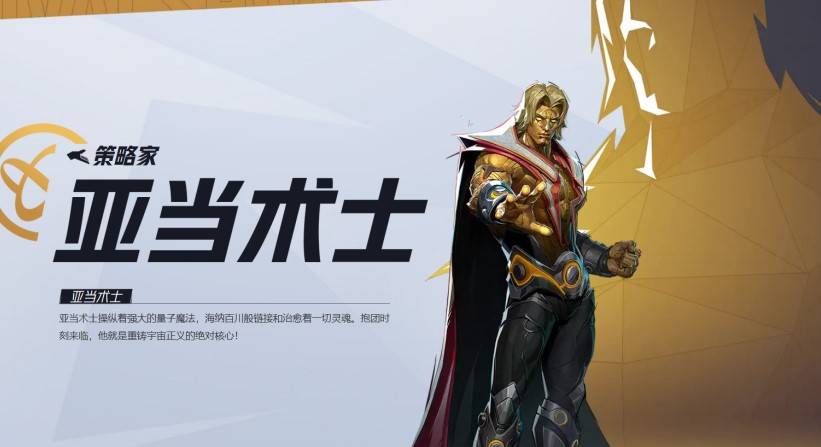
Marvel Rivals: Hero Roster Guide — Roles, Abilities and Playstyles
Marvel Rivals splits its superhero roster into Vanguards, Duelists and Strategists. Here is what each role is responsible for, and how Captain America, Doctor Strange, Black Panther and Adam Warlock are meant to be played.