 FPS / Shooter
Overwatch 2 Heroes: A 51-Hero Roster Across Three Roles
The 51-Hero Roster in 2026
Overwatch entered 2026 with a relaunch. To mark the game's tenth anniversary, Blizzard dropped the 'Overwatch 2' label and returned to the simpler 'Overwatch' name, while the year's content rolled out under a single storyline called 'Reign of Talon,' pitting the villainous Talon against the heroes.
The roster itself reached 51 playable heroes during 2026. The expansion cadence accelerated sharply: Season 1 shipped a burst of five new characters at once, and the seasons after that added roughly one hero each, so the bench keeps growing as the year goes on. For a new player the practical takeaway is simple — you do not need to learn all 51 at once. You need to learn your role, a few starter heroes, and how the role system shapes every match.
Three Roles in 5v5 Role Queue
Overwatch plays as 5v5, and the role system is the backbone of the game. In Role Queue each team fields one Tank, two Damage heroes, and two Supports. That 1-2-2 shape is enforced so every match has a frontline, damage output, and healing.
- Tank makes space and protects the team. With only one per side, the Tank sets the tempo of the whole fight.
- Damage secures kills and pressures the enemy backline. Two slots mean there is room for different damage styles to complement each other.
- Support heals, buffs, and keeps the team alive through sustained fights.
Understanding the 1-2-2 lock is the first thing a beginner should internalize, because it tells you why your pick matters even before the fight starts.
New Heroes Under the Reign of Talon Arc
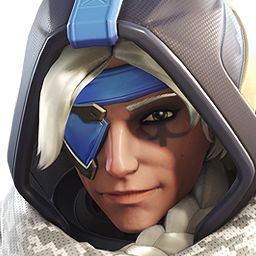
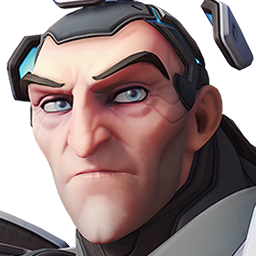
The 2026 'Reign of Talon' story brought a wave of fresh faces. Season 1 alone added five heroes: Domina, a long-range Poke Tank who shields allies with hard-light barriers; Emre, a Damage hero and former Overwatch member who can transform into a flying state; Anran, a Damage hero tied to Talon who can revive with an explosion if her ultimate is ready on death; Mizuki, a new Support; and Jetpack Cat, a cat with a jetpack. Season 2 then introduced Sierra, a Helix Security Damage hero who commands a flying drone and a repeating pulse rifle, as the 51st hero on the roster.
Because new heroes arrive regularly, the meta shifts often. The smart habit is to learn evergreen fundamentals first and treat each new release as something to study after you have the basics down.
Beginner Picks to Learn First
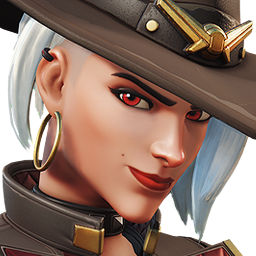
You do not need a deep bench to climb. Start with one approachable hero per role so you can fill comfortably or main a lane:
- Tank: Reinhardt is the classic teacher — a big shield, a charge, and a hammer teach you how to lead a frontline. D.Va is the flexible alternative, with a matrix to block fire and a mech that rewards good positioning.
- Damage: Soldier: 76 is the all-rounder, with a hitscan rifle, a heal station, and a sprint that keeps him mobile. Reaper is the close-range pick who punishes tanks and thrives in the enemy's face.
- Support: Mercy is the forgiving healer who links to allies and stays safe, while Kiriko brings healing, mobility, and a clutch ultimate that can revive a team.
Learn these six and you can play almost any queue without feeling lost.
Sub-Roles: A New Layer in 2026
Season 1 also introduced sub-roles, which group heroes inside each main role and grant a small passive that applies to everyone in that group. This is a genuinely useful onboarding tool because the label tells you how a hero is meant to be played.
- Tanks split into Bruisers, Initiators, and Stalwarts.
- Damage splits into Sharpshooters, Flankers, Specialists, and Recon.
- Supports split into Tacticians, Medics, and Survivors.
The passives matter in practice. Tacticians, for example, let excess ultimate charge carry over after activation, while Flankers restore more health from health packs. When you pick a hero, read its sub-role — it is a free hint about the playstyle that wins with that character.
Learn the Counter Web
Overwatch is a matchup game, and the fastest way to improve is to read what the enemy is doing and pick the style that beats it. Two patterns cover most situations:
- Dive comps — teams that leap onto your backline — are answered with crowd control. Stuns, sleeps, and hard lockdown shut down divers before they delete your supports.
- Bunker comps — teams that hunker behind shields and poke from range — are answered with poke of your own and angles that bypass the shield, not by running straight into it.
You do not need to memorize every counter. Start with these two, and add one new matchup to your mental list each week. Within a month you will read most team comps at a glance.
Aim Training: The Beginner's Edge
Because Overwatch is a shooter at its core, raw aim is the skill that rewards daily practice most directly. You do not need a fancy routine — you need consistency. Spend ten minutes in the practice range before each session warming up your tracking on the moving bots and your flicking on the stationary ones. If you main a hitscan like Soldier: 76 or Cassidy, prioritize smooth tracking; if you main a projectile hero like Genji or Echo, prioritize leading your shots and predicting movement.
Aim training is not about grinding until you are tired. Short, focused sessions build muscle memory faster than marathon ones, and the gains carry straight into matches. Pair that with the counter-web reading above, and your mechanical improvement will actually convert into wins instead of just higher damage numbers on the scoreboard.
Ultimate Economy and One Hero Per Role
Ultimates are the swing factor in Overwatch, so treat ultimate charge like a currency. Bank your key ultimate for the fight that decides the round rather than spending it the instant it is ready. A well-timed team wipe or save changes more games than a slightly earlier, wasted ult.
Finally, depth beats breadth. Learning one solid hero per role — one Tank, one Damage, one Support — gives you a reliable foundation and lets you fill any team need. A shallow bench of ten half-known heroes will lose to a focused player who truly owns three. Pick your three, learn their counters, manage your ults, and the rest of the 51-hero roster can wait.
Tempo: Read the Kill Feed Before the Scoreboard
In a five-versus-five match, each missing player removes a fifth of the team rather than a sixth, which makes the first elimination of a fight disproportionately decisive. The practical consequence is that your response to a death should be decided in under a second, and it should be based on who died rather than on how you feel the fight is going.
When the first elimination goes to your team, take ground immediately. Space is the reward for winning that trade, and players who earn a man advantage but stay behind the same corner have converted nothing. When it goes against you, trade space for time: retreat to the next corner or the health pack behind you and wait out the disadvantage rather than shooting into it.
The rule that follows is that gambling while down is worse than waiting. Taking a duel at a numbers disadvantage usually just adds a second corpse and pushes your respawn timers further apart, creating the stagger that loses objectives outright. If two teammates are already dead, either commit fully to escaping or, when there is no escape, lose quickly so your timers realign with theirs.
Learn to check respawn timers by habit. Before you re-enter a fight, know when your dead teammates arrive. A fight started fifteen seconds before reinforcements is a different fight from one started two seconds before them, and the second is almost always the one you should pick.
Turning Your Sub-Role Into a Concrete Habit
You do not need to memorise the exact text of every sub-role passive. You need one habit per label, because each label already tells you what the designers expect you to be doing while your buttons are on cooldown. Read your hero's entry on the hero screen to see which one applies, then install the matching routine.
| Sub-role | The implied job | The habit to install |
|---|---|---|
| Initiator (Tank) | Start fights deliberately | Announce your engage before you commit mobility, so the team is in follow-up range |
| Stalwart (Tank) | Hold a chosen piece of ground | Pick your position before contact; treat chasing as a mistake |
| Bruiser (Tank) | Win extended trades | Track enemy escape cooldowns before you trade health |
| Sharpshooter (Damage) | Punish exposed targets from range | Claim the long sightline before the fight starts, not during it |
| Flanker (Damage) | Attack from off-angles | Time your angle to your tank becoming visible, and route through health packs |
| Recon (Damage) | Find and finish | Ping information even when you cannot shoot, especially without your ultimate |
| Medic (Support) | Sustained healing output | Stand where you can see the most teammates at once |
| Tactician (Support) | Utility and ultimate efficiency | Track enemy ultimates and avoid sitting on a charged ultimate for too long |
| Survivor (Support) | Self-reliant duelling | Take fair duels yourself rather than hiding behind the team |
Installing even two of these habits changes your impact more than adding a fourth hero to your bench.
Four Habits That Lose Fights and Their Fixes
| What happens | Why it happens | The fix |
|---|---|---|
| Your team keeps trickling in and never contests together | Re-entering without checking respawn timers staggers deaths across the whole round | Group before crossing the last corner, and treat waiting eight seconds as part of the play |
| Your healer has huge numbers but teammates keep dying | Healing was spent on allies already safe while the engaged teammate had no line of sight | Prioritise whoever is currently taking damage or about to commit; pre-place yourself where the fight will happen |
| Your ultimate wins a fight that was already lost | Ults are being spent on reaction rather than on the swing | If the team is down two players, save it; spend it only when it can change the outcome |
| You die holding an escape ability you never used | Committing fully felt productive, so retreat planning was skipped | Before every angle, name the route back and who can see you on it |
Notice that none of these fixes require better aim. Most early losses in this game are structural rather than mechanical, which is exactly why they are worth fixing first.
A Measurable Self-Check: The Death Audit
Improvement sticks when it produces numbers. After every session, list each death in one short clause: what you were doing, and what killed you. Then sort each entry into positional or mechanical. A positional death is one where you were somewhere you should not have been; a mechanical one is a fair fight you lost.
Two numbers come out of this and both are worth tracking weekly. The first is your share of deaths occurring within a few seconds of a teammate's death, which is your stagger indicator and should shrink toward zero. The second is positional deaths as a percentage of the total, which tells you whether your next practice session should be about positioning or about aim.
To make the audit accurate rather than self-serving, use the replay viewer. Scrub back roughly five seconds before each death and ask one question: did I know where every threat was? If the answer is no, it is a positional death regardless of how it felt in the moment, because good players die with information and bad deaths happen without it.
Keep the list in a single note rather than in your head. Three sessions of honest entries are usually enough to reveal one repeated mistake that accounts for a large fraction of your deaths, and fixing that single habit will move your results far faster than any aim routine.
🔥 Topics
Once Human Season Start: Lock Your Build Direction in Three Days
Next →Minecraft: Ten Ways to Survive Your First Night