 FPS / Shooter
VALORANT: Climbing Out of Silver — Crosshair, Sensitivity and Mindset
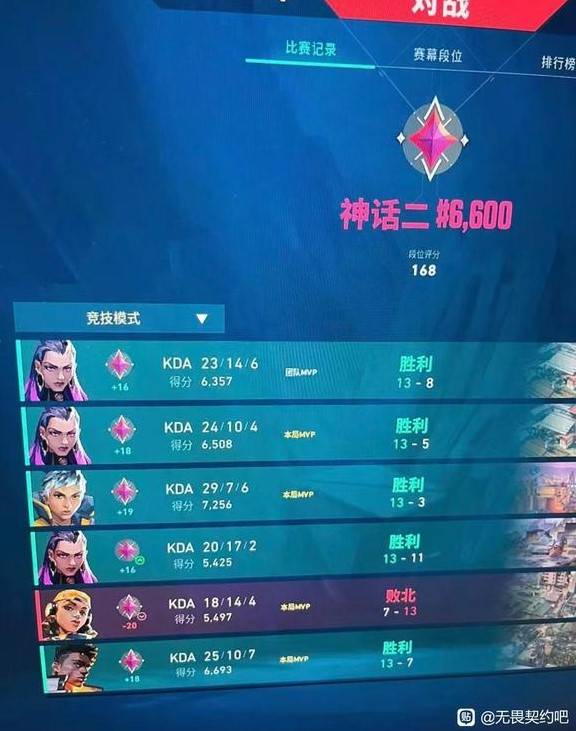
Getting stuck in Silver is rarely a gunplay problem. Most players there already have serviceable crosshair placement, spray control and reaction speed — what separates them from Ascendant is a pile of small decisions they never think about. This is the setup and ranked philosophy of a player who climbed from Silver to Ascendant, stalling in Gold, stalling again in Platinum, and deranking once or twice purely because of tilt.
Crosshair: One Dot and Nothing Else
The crosshair is as stripped down as VALORANT allows: a single center dot, no inner lines, no outer lines, no movement or firing error. Just one small point in the middle of the screen.
The reasoning is functional, not aesthetic. A busy crosshair puts visual noise exactly where your eyes need to do their most precise work. With one dot the screen stays clean and attention stays on the target rather than the reticle, and long-range tap firing feels noticeably more comfortable than with layered or animated variants. That matters most on the duels Silver players lose most often — across-site fights where the enemy head is only a few pixels wide.
There is no objectively correct crosshair. Pick one, commit, and stop shopping: every week spent swapping crosshair codes is a week your muscle memory spends re-learning where the screen center is.
Sensitivity and eDPI: 800 DPI at 0.27
The settings are simple: 800 DPI, in-game sensitivity 0.27, and a scoped multiplier of 1.
Multiplying mouse DPI by in-game sensitivity gives your eDPI, the number players actually compare: 800 × 0.27 = 216 eDPI, in the lower half of the competitive range where most players with consistent long-range aim end up. A scoped multiplier of 1 keeps zoomed sensitivity identical in feel to hipfire, so Operator and Marshal scopes do not add a second muscle memory to maintain.
Two rules matter more than the exact number. Once you land in a range you can physically control, stop changing it — constant adjustment is itself a cause of inconsistent aim. And if you do switch, give it several sessions before judging, because the first hour always feels wrong regardless of direction.
Your sensitivity is also almost never why you lost a duel. At long range your tolerance window is a tiny fraction of a degree of rotation, so the players beating you are usually the ones who stopped moving before firing.
The Ranked Mindset: Stop Hunting Opening Kills
Low-rank lobbies run on an unspoken rule: the round has to start with a kill. Players feel they must get first blood and generate an immediate advantage, so they wide-swing on round start and take a coin-flip fight. When it works it feels great; when it loses, the round is played four versus five.
On defense especially, staying alive is worth far more than one kill. A living defender stalls the clock, trades a teammate's death, calls information, and is still on the map for a retake. The pattern across ranks is that the higher you climb, the more patient players become — not because they are passive, but because they know when to take initiative and when to wait.
Underneath this is the real nature of the game: VALORANT is an information game. Whoever has more information and makes the better decision wins more rounds, and one piece of intel from a dart, a recon bolt or a well-placed trip can be worth more than a kill. Every time you sprint at the first sound you hear, you trade decision-making for a duel you did not need to take.
Why You Are Actually Stuck
Four habits account for most hard-stuck accounts.
Ignoring the economy. Plenty of players never look at the money. Lose round two, force-buy anyway, have nothing on round three, half-buy on round four, still cannot afford a rifle on round five — the team spends half the match without full guns and the tempo collapses. Take clean ECO rounds, save so the next round has a full buy, and accept that deliberately conceding one round can win the following two or three.
Playing a different agent every day. Jett today, Raze tomorrow, Sova the next day, Brimstone after that. It looks like versatility, but it is a shallow pool. Lock in two or three agents you enjoy and learn them exhaustively: ability lineups, attack paths, defensive setups, post-plant positions. Clutches you used to lose start resolving themselves.
Grinding aim while ignoring the map. High-rank rounds are frequently decided before a shot is fired, because players know when to rotate, when to retake, when to fake, when to fill a gap, when to gamble a site and when to save the gun. Aim sets your floor; map understanding sets your ceiling.
Never watching the minimap. Overlooked constantly, and the fastest fix on the list.
A Daily Routine That Actually Transfers
Aim training only helps if ranked does not undo it. The common failure is drilling crosshair placement, spray control and headshots daily, then loading into ranked and playing it like a Team Deathmatch — shooting at anything that moves, sprinting at every footstep.
Split a short daily block instead: a few minutes warming up on placement and headshot reps, then Deathmatch with a constraint rather than a kill target. Constraints that transfer: never re-peek the same angle twice, never shoot while still moving, and have your crosshair at head height before you turn a corner rather than after. The constraint is what carries practice into ranked.
Finish by checking your economy decisions for the day, not your K/D. If you cannot remember what your team bought on round three, that is tomorrow's fix.
VOD Review, the Minimap, and Queuing With People
Review your own replays after a session. The pattern is almost always the same: a large share of deaths were avoidable, because a teammate had already given the information — the enemy pinged on the minimap, the position called, the rotation visible — and you simply were not looking. Glancing at the minimap between actions measurably drops your death rate.
Queue with people when you can. A duo or stack guarantees baseline communication, and the worst thing in ranked is not an enemy with good aim but five teammates who say nothing all match. Rounds are lost on information gaps more than aim gaps; one clean callout can flip an entire round.
Finally, protect your mental state. Losing two games in a row is not the problem — getting tilted after two losses is. Once you start rushing, blaming teammates and doubting yourself, you play worse, which produces more losses and more tilt. When your state slips, step away for ten or fifteen minutes, drink some water, then come back. The players who reach Ascendant are mostly the ones who stopped donating the bad nights.
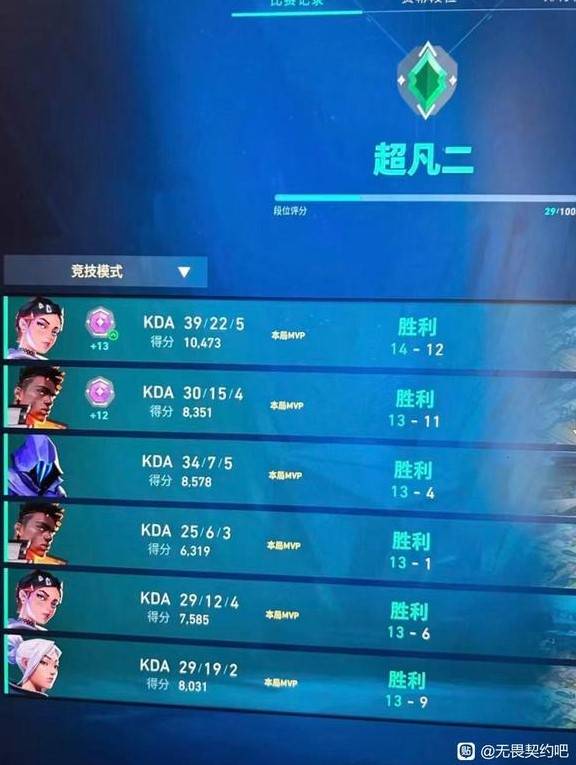
None of this is a guaranteed formula — plenty of it is preference rather than law. But every item here removed a specific recurring loss from the Silver-to-Ascendant climb: the single-dot crosshair, 800 DPI at 0.27 for a 216 eDPI, real ECO discipline, a two-to-three agent pool, minimap awareness, and a hard stop when you tilt. Fix one at a time.
🏷️ Related Tags
🔥 Topics
PUBG Landing Zones: Where to Drop for More Wins
Next →Wuthering Waves Beginner Roadmap: Union Level, Echoes and Your First Team
More “VALORANT” Content
 FPS / Shooter
VALORANT Season 26 Act 3 Agent Tier List
The current V26 meta rewards utility and coordination. Clove, Sage, Killjoy, and Sova sit at the top, while climbing is best done with one agent and a calm head.
 FPS / Shooter
Ascent Smoke and Flash Handbook: Three Ways to Take Mid Control
On Ascent, the team that controls mid controls the round. Learn why mid matters, a clean A Main smoke-and-flash set, and three ways to play the space.
 FPS / Shooter
VALORANT Crosshair and Settings: Finding Your Aim Profile
The actual maths behind VALORANT sensitivity — counts per degree, the cm-per-360 formula, eDPI bands and how resolution stretching changes perceived speed — plus crosshair parameter ranges and a real A/B protocol. Includes three build walkthroughs and the diagnostic table that tells you whether your misses are a settings problem or a crosshair-placement problem.