Overview
Diablo IV is an action RPG built on the satisfying loop of killing enormous numbers of demons to obtain incrementally better loot. Its structure splits between a story campaign that can be completed once and an endlessly replayable endgame of Nightmare Dungeons, Helltides, and seasonal content. The core appeal is build crafting: assembling skills, aspects, and gear so that a chosen mechanic multiplies into overwhelming power.
The game rewards players who enjoy systems math. Damage in Diablo IV is calculated through layered multipliers, and understanding which categories apply multiplicatively versus additively is what separates a build that struggles from one that trivialises content.
The Core Loop
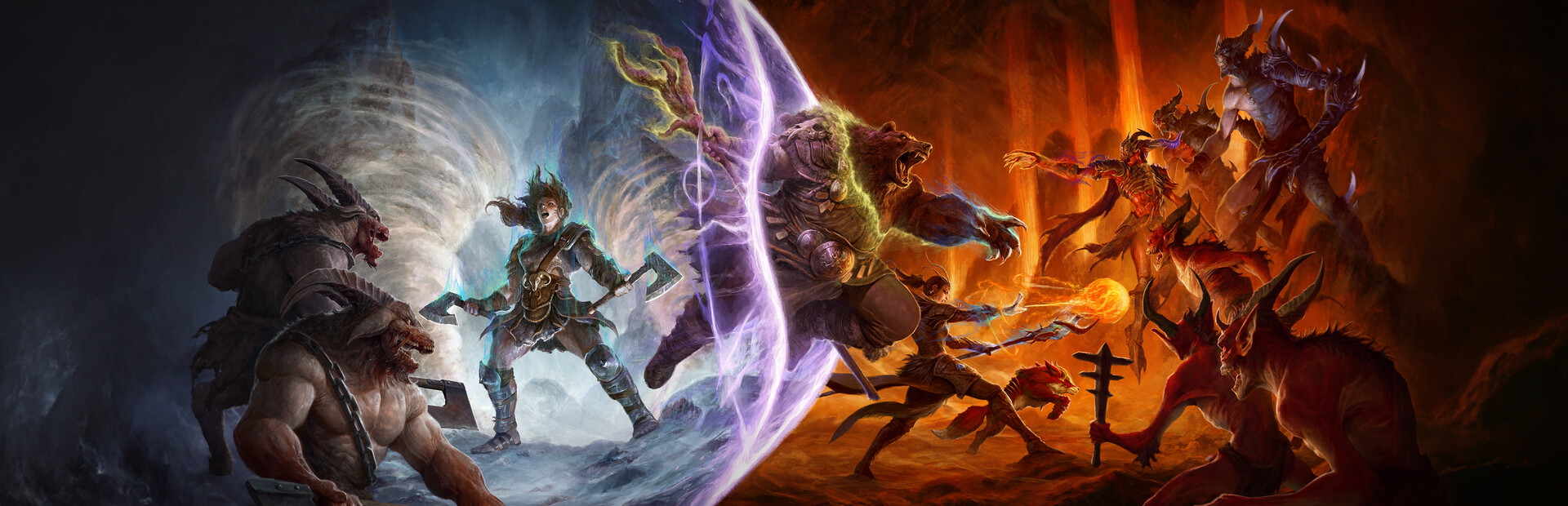
You create a character in one of six classes, progress through the campaign to the level cap, then enter the endgame loop of clearing dungeons and boss rotations for upgrades. Seasonal play resets characters periodically and introduces themed mechanics, which keeps the chase fresh for players who have exhausted the base content.
Because loot drops continuously, the loop is less about any single drop and more about incremental optimisation: rerolling affixes at the occultist, imprinting aspects onto gear, masterworking items to increase their stats, and gradually replacing pieces until your chosen mechanics align.
Key Systems
Each class has a distinct resource and mechanic that defines how it plays.
| Class | Resource | Defining mechanic | Playstyle |
| --- | --- | --- | --- |
| Barbarian | Fury | Arsenal system, multiple weapon types | Melee brawler with weapon swapping |
| Sorcerer | Mana | Enchantment slots | Glass cannon elemental caster |
| Druid | Spirit | Shapeshifting forms | Hybrid melee and nature casting |
| Rogue | Energy | Combo points and imbuments | Mobile precision damage |
| Necromancer | Essence | Minion army | Summoner or shadow caster |
| Spiritborn | Vigor (Season 6+) | Spirit guardian attunement | Agile hybrid |
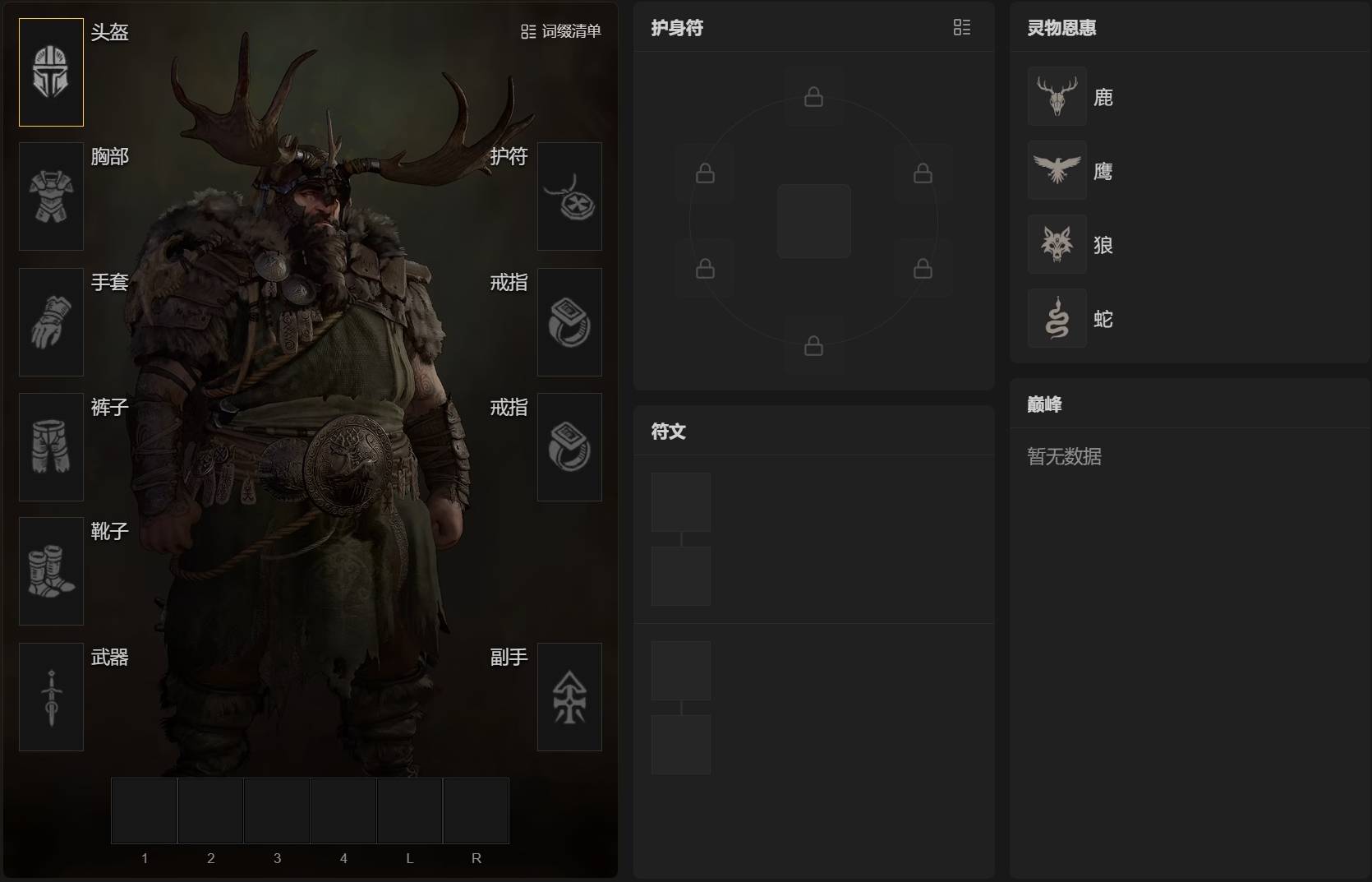
Aspect and unique items form the build language. Legendary Aspects can be extracted and imprinted onto different gear pieces, which is the primary way to customise a build. Uniques have fixed powerful effects that often define entire archetypes, and chasing the right unique is a major endgame activity.
The Paragon system provides post-cap progression through a board of nodes offering incremental stats and occasional powerful legendary nodes. Because Paragon points accumulate over hundreds of levels, planning your board around your build's scaling mechanism — critical strike damage, vulnerability, or overpower — is where much of the endgame optimisation lives.
Strategy That Actually Works
Build around one mechanic, then stack every multiplier that feeds it. A common mistake is spreading across many damage sources; Diablo rewards concentration because multiplicative bonuses compound. If your build scales critical strikes, every gear slot, aspect, and Paragon node should amplify crit rather than adding modest flat damage.
Prioritise defensive layers before pushing higher difficulty tiers. Armour caps and resistance caps exist, and reaching them roughly doubles your survivability. Many players stall in progression not because their damage is too low but because they are dying faster than their build can sustain.
Salvage rather than sell unwanted legendaries in the early game, because crafting materials become the bottleneck for imprint and upgrade costs. Sell only when you genuinely lack gold for rerolls.
Use seasonal mechanics early. Because seasonal content offers accelerated access to certain rewards and often includes a questline that grants key aspects, completing it first makes every subsequent upgrade faster.
Common Mistakes
Ignoring resistances is the classic endgame wall. The second is spreading Paragon points across unrelated damage types, which produces a character that is mediocre at everything.
The third is hoarding materials instead of using them. Upgrading mid-tier gear while farming is usually correct, because the upgrade carries you to the next tier faster than waiting for a perfect drop. The fourth is skipping the campaign rewards that unlock aspects permanently, which removes options available to all future characters.
Getting Started
Play the campaign on a comfortable difficulty rather than the highest available; the story is genuinely well-paced and is best experienced without repeated deaths interrupting it. Save the difficulty tuning for the endgame, where it serves a purpose.
Pick the class whose fantasy appeals to you most, because you will spend dozens of hours with it and every class is viable through the campaign. Once you reach the endgame, consult build guides to understand the multiplicative logic, then adapt rather than copying blindly.
Best for players who enjoy loot-driven progression, build optimisation, and the specific satisfaction of watching a carefully assembled multiplier stack delete an entire screen of enemies.
Seasonal Planning and Long-Term Progression
Diablo IV seasons are time-boxed, so the practical question at the start of each one is what you intend to finish. Chasing one mechanic deeply yields far better results than sampling every system shallowly, and most seasons are designed so that a focused character reaches the endgame comfortably within the window.
Build scaling in Diablo is multiplicative, and understanding that is what turns a struggling character into a strong one. Damage multipliers from different buckets multiply together, so spreading points across unrelated damage types produces a character that is mediocre at everything. Consolidating into one or two scaling buckets is almost always correct.
Materials should be spent during the climb rather than hoarded. Upgrading mid-tier gear while farming carries you to the next tier faster than waiting for a perfect drop, and the seasonal journey objectives usually reward the play pattern anyway.
 RPG / Action