Overview
Monster Hunter Wilds is Capcom's flagship hunting action RPG, and its loop is famously self-contained: track a monster, fight it for fifteen to forty minutes, carve materials, craft stronger gear, then hunt something bigger. There is no levelling system — your power comes entirely from your equipment and your own growing mastery of weapon movesets. That design is why veterans can spend thousands of hours without the game ever handing them a free win.
Wilds refines the formula with a more seamless open field, improved mounting and riding mechanics, and a wound system that rewards targeting specific body parts. The result is the most approachable entry in the series without sacrificing the deliberate, preparation-heavy combat that defines it.
The Core Loop
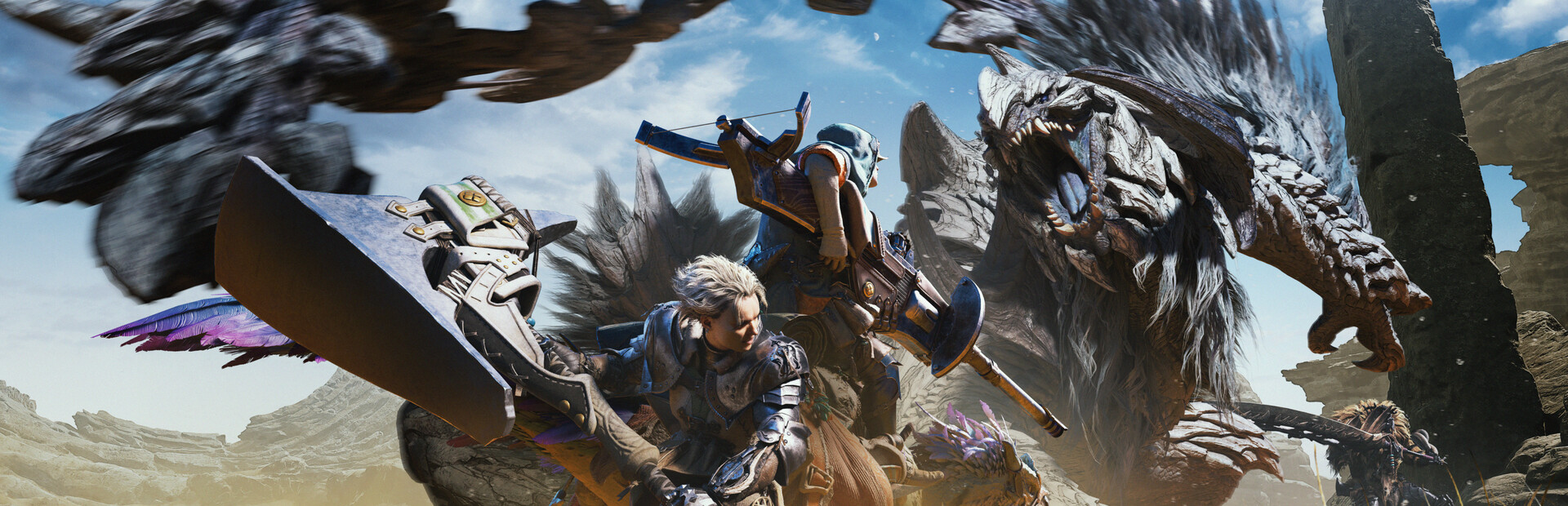
Each hunt begins with preparation: selecting weapon and armour appropriate for the target's elemental weaknesses, stocking items, and eating a meal for temporary stat buffs. Then you track the monster, engage it, and slowly dismantle it — breaking parts, severing tails, and exploiting openings until it can be captured or slain.
Because hunts are long and mistakes are punishing, the loop teaches patience. Every aggressive monster has telegraphed attacks, and learning to read those tells is how you convert chaos into a rhythm. The reward loop is tightly coupled: defeating a specific monster yields the parts required to build armour that makes the next tier of monster survivable.
Key Systems
Fourteen weapon types exist, each functioning almost as its own character with a unique moveset, mobility profile, and defensive option. Choosing one is more consequential than any other decision in the game.
| Weapon | Style | Difficulty | Core mechanic |
| --- | --- | --- | --- |
| Great Sword | Slow, devastating hits | Medium | Charged slashes, tackle through attacks |
| Long Sword | Flowing counters | Medium | Spirit gauge, foresight slash counters |
| Sword and Shield | Versatile, safe | Easy | Fast combos, can use items while drawn |
| Dual Blades | Relentless aggression | Easy | Demon mode for boosted flurries |
| Hammer / Hunting Horn | Impact and support | Medium to hard | Stun damage, or buffs via melodies |
| Lance / Gunlance | Defensive wall | Medium | Counter-thrusting, or shelling bursts |
| Bow / Bowguns | Ranged precision | Medium | Range management and coatings or ammo |
Armour provides skills rather than raw levelling, and skills are activated by reaching thresholds. This makes set-building the core theorycraft activity: you are assembling skill combinations rather than simply wearing the highest-defence pieces.
The wound and part-break system in Wilds rewards precision. Targeting wounds deals bonus damage, and focusing a monster's weak points accelerates hunts considerably. This is the mechanic that most rewards players who learn monster anatomy rather than attacking whatever is closest.
Strategy That Actually Works
Learn one weapon thoroughly before experimenting. Because each weapon is effectively a moveset you must internalise, spreading across weapons early slows progress significantly. Pick one that matches your temperament and commit for twenty hours.
Prepare before every hunt rather than reacting during it. Bringing the right elemental weapon, the correct resistance armour, and sufficient healing items frequently matters more than mechanical execution. Setting item loadouts so you can restock in seconds removes the main friction.
Dodge toward or through attacks rather than away. Monsters have forward-reaching hitboxes and most attacks track a retreating hunter. Rolling sideways or through the attack usually positions you safely and sometimes inside the monster's guard.
Use traps and environmental hazards. Shock traps and pitfall traps create guaranteed damage windows, and endemic life scattered across maps provides free damage or buffs. Many difficult hunts become straightforward once you stop treating the field as empty space.
Common Mistakes
Attacking continuously without watching the monster is the classic error; the punishment for greed is usually a cart (death). The second is neglecting to sharpen your weapon, because a degraded sharpness level sharply reduces damage and causes bouncing.
The third is ignoring elemental weaknesses, which can double or halve your effective damage. The fourth is failing to eat before hunting — the stat buffs from a meal are significant and free, and skipping them makes every hunt harder than necessary.
Getting Started
Start with Sword and Shield or Dual Blades if you are new to the series; both are forgiving, mobile, and teach universal fundamentals like reading tells and managing stamina. Use the training area extensively to learn your chosen weapon's full combo list.
Play the story quests before diving into endgame content, because they unlock the systems gradually and provide the materials you need. Do not be discouraged by long hunts — twenty minutes is normal, and the pacing is intentional.
Best for players who enjoy methodical preparation, deliberate combat, and mastery-driven progression where real improvement comes from knowledge rather than numbers.