Overview
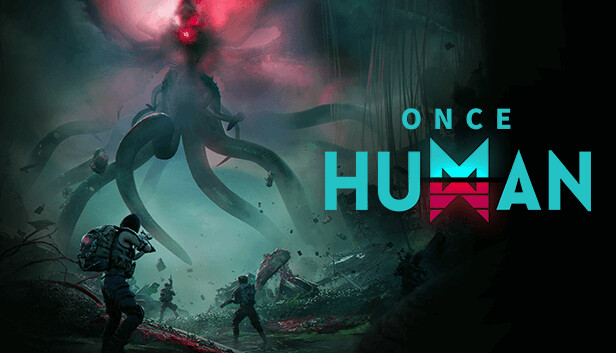
Once Human is a free-to-play open-world survival shooter set in a reality-warped wasteland consumed by an anomalous substance called Stardust. You scavenge, build territory, and fight Deviant enemies alongside other players across large shared regions. What distinguishes it from similar survival games is a seasonal structure and a deliberate blend of PvE exploration with optional PvP zones.
Thematically it leans hard into strange science-fiction horror — environments mutate in unsettling ways and enemies frequently defy conventional biology. Mechanically it is a competent survival loop with territory building, crafting progression, and large-scale boss encounters that support many players simultaneously.
The Core Loop
Each season places you in a scenario with its own map, modifiers, and progression track. You gather resources, build a territory, craft better gear, and complete settlements and monoliths that drive the story forward. Because seasons reset progress in specific ways, the loop is designed for repeat engagement rather than a single endless campaign.
Deviants are central to both combat and base development. These captured entities can be deployed to assist you, some attack enemies while others gather resources at your territory automatically. Choosing which Deviants to pursue is therefore both a combat and an economy decision.
Key Systems
Progression combines traditional levels with a memetics system that unlocks crafting recipes and facilities.
| System | Purpose | How it advances | Notes |
| --- | --- | --- | --- |
| Scenario / Season | Frames each playthrough | Seasonal resets | Different maps and modifiers per season |
| Memetics | Crafting and facility unlocks | Spending ciphers earned by playing | Resets partially between seasons |
| Deviants | Combat allies and base workers | Captured from the world | Different utility per type and rarity |
| Territory building | Base construction | Resource gathering | Placement affects resource access |
Weapon and armour progression follows familiar tiers, but blueprint drops meaningfully influence what you can effectively use. Because blueprints must be obtained rather than assumed, finding a strong weapon blueprint early can define a whole season's playstyle.
PvP is opt-in through designated zones and servers with different rule sets. Players who prefer pure PvE can largely avoid conflict, while those seeking it can flag into contested areas. Understanding which activities require crossing into PvP-enabled space is important preparation.
Strategy That Actually Works
Start each season by prioritising memetic unlocks that improve gathering and crafting efficiency rather than raw combat stats. Earlier access to better tools and storage compounds over dozens of hours far more than a marginal damage increase.
Place your territory near resource nodes you actually need. Territory building is expensive to relocate, and a well-sited base next to water, ore, and hunting grounds saves significant travel throughout the season.
Capture Deviants early and experiment with their base functions. Some substantially accelerate resource gathering, and having even one proficient gatherer operating automatically while you explore is a meaningful economy advantage.
Prepare before entering PvP zones. Carry only what you are willing to lose, bank valuable materials first, and travel with awareness rather than autopilot. Most frustrating losses come from entering contested space unprepared rather than from losing a fair fight.
Common Mistakes
Spending ciphers on combat perks before economy unlocks slows the whole season. The second is building territory in aesthetically pleasing but resource-poor locations.
The third is neglecting Deviants entirely, which removes both a combat ally and a passive economy. The fourth is carrying everything valuable into PvP zones and losing it all unnecessarily.
Getting Started
Follow the scenario questline during your first hours; it teaches the survival loop, introduces crafting, and grants key unlocks efficiently. Build modestly at first and relocate only once you understand the map's resource layout.
Choose a server type that matches your interest — PvE-focused if you want to explore without interference, or PvP-enabled if competition appeals. This decision shapes the entire season more than any build choice.
Best for players who enjoy open-world survival with supernatural horror flavour, base building, and seasonal progression loops.
Progression, Deviations, and Settlement Planning
Once Human layers survival crafting over a scenario-based seasonal structure, and the most important thing to understand is that progression resets when a scenario ends while certain unlocks carry forward. That means the correct approach is to invest in permanent unlocks — blueprints, cosmetics, and account-level progression — rather than over-building a settlement you will leave behind.
Deviations are the distinctive system. These captured entities provide passive production, combat assistance, or utility, and the good ones are worth hunting specifically rather than settling for whatever you find first. A deviation that automates a resource you otherwise farm manually is effectively a permanent efficiency upgrade for the rest of the season.
Settlement placement is the other decision that pays off long-term. Building near multiple resource nodes and a teleport point cuts travel time dramatically, and travel time is the largest hidden cost in any survival game. Plan the base around what you farm most, not around what looks best.