 Indie
IndieStardew Valley Profit Guide: Crops, Seasons, and the Best Money Loops
How to turn a small Stardew Valley plot into a reliable gold engine using seasonal crops, regrowth math, and the keg-processing loop.
Farmer·19d ago77.6K views
🕹️ Indie · Paid
Stardew Valley opens with you quitting a soulless office job to inherit a run-down farm, and then hands you one of the cleanest time-management loops in games. Every day is a fixed span of in-game hours, every action costs energy, and every season lasts twenty-eight days. Those three constraints are the entire game: what you do with a finite day is what determines whether your farm thrives.
It is deliberately gentle. There is no fail state, no combat you cannot avoid, and no deadline you cannot push back. But underneath the cozy presentation sits a genuinely deep economic simulation, and players who engage with it find profit curves, crop math, and production chains that rival dedicated strategy games.
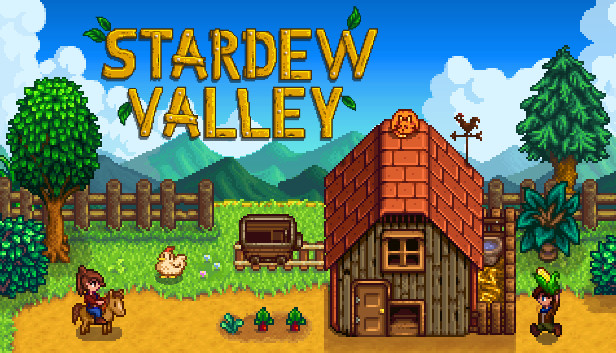
A normal day runs: water crops, check animal products, process anything that can be processed, then spend remaining time and energy on mining, fishing, foraging, or socializing. Energy is the binding constraint early — you will collapse before you finish — and it becomes less binding as you upgrade tools and unlock better food.
The key economic principle is that raw crops are almost never the best thing to sell. Turning them into artisan goods — cheese, mayonnaise, wine, jelly, pickles — multiplies value, and the machines that do it work passively overnight. A farm full of kegs and preserve jars earns many times what the same plot earns selling raw produce.
Profit per day is the metric that matters, because seasons are short and a crop that pays more but takes longer is often worse.
| Approach | Time cost | Profit profile | Best for |
| --- | --- | --- | --- |
| Raw crop sales | Low | Lowest per tile | First-year cash flow |
| Kegs (wine/juice) | High setup, passive | Very high per tile | Late-game passive income |
| Preserve jars | Medium setup, passive | High, faster turnover | Mid-game steady income |
| Animals + artisan | Daily attention | Strong and consistent | Players who like routines |
| Fishing | Active time | Strong early, skill-gated | Early cash before infrastructure |
Crop choice depends on regrowth. Blueberries, cranberries, and ancient fruit keep producing after the first harvest, which means you pay the planting cost once and harvest repeatedly — dramatically better profit per seed than single-harvest crops like melons or pumpkins.

Plant regrowing crops and build processing in parallel. Ancient fruit in the greenhouse plus a shed full of kegs is the classic endgame engine, but the principle applies from year one: pick a multi-harvest crop and start converting it rather than selling it raw.
Upgrade your watering can and hoe before anything else, because tool upgrades are what compress the daily chore list and free energy for profitable work. Sprinklers are the single largest quality-of-life jump in the game — they eliminate watering entirely and let you scale far beyond what manual watering allows.
Go mining on bad luck days and fishing on good ones if you want to optimize, and always keep a chest of food for energy recovery. Time in the mines is gated by how deep you can get before collapsing, not by combat difficulty.
The most common is planting too much and collapsing from exhaustion, which wastes the rest of the day. Second is ignoring the community center bundles, which gate greenhouse access and other major unlocks behind completion. Third is selling everything raw and wondering why money is tight.
Fourth is neglecting relationships, since villagers unlock recipes, gifts, and cutscenes that materially help progression. Fifth is not planning for the seasonal cutoff — crops die on the first day of a new season, so planting a twenty-eight-day crop on the tenth of the month loses most of the investment.
Pick the standard farm map for your first run; the specialized maps are interesting but the standard layout is the most forgiving. Spend spring on a mix of cheap fast crops and relationship building rather than trying to maximize profit immediately.
Clear enough of the farm to place sprinklers as soon as you can craft them, and build a silo before a coop so you are not hand-feeding animals. Fish on rainy days when watering is free. And do not rush — the game is explicitly built so that nothing is permanently missable, so an inefficient first year costs you time rather than the run.
Best for players who enjoy gentle optimization, routine-building, and the long satisfying arc of turning a chaotic farm into a machine that prints money while you sleep.
The endgame in Stardew Valley is about converting a working farm into a passive income engine. Ancient fruit in the greenhouse, paired with a shed full of kegs, produces wine that requires almost no daily attention once established. Players who reach that point generally stop needing to think about money at all.
Quality-of-life infrastructure is what makes it sustainable. Junimo huts automate harvesting, auto-grabbers handle animal products, and a well-placed set of chests near the shipping bin compresses the daily routine to a few minutes. Investing in automation before expanding production is the correct order.
Perfection tracking and the late-game quests give long-term players something concrete to pursue, but the more rewarding goal for most people is simply designing a farm that runs itself. Once the daily chore list disappears, the game shifts from management to creative building, which is where it is most relaxing.
1 in total
IndieHow to turn a small Stardew Valley plot into a reliable gold engine using seasonal crops, regrowth math, and the keg-processing loop.